The Architecture of the Trace: Formalism, Dream Logic, and the Archive. A composer’s credo (2010-2026)
Mar 15, 2026
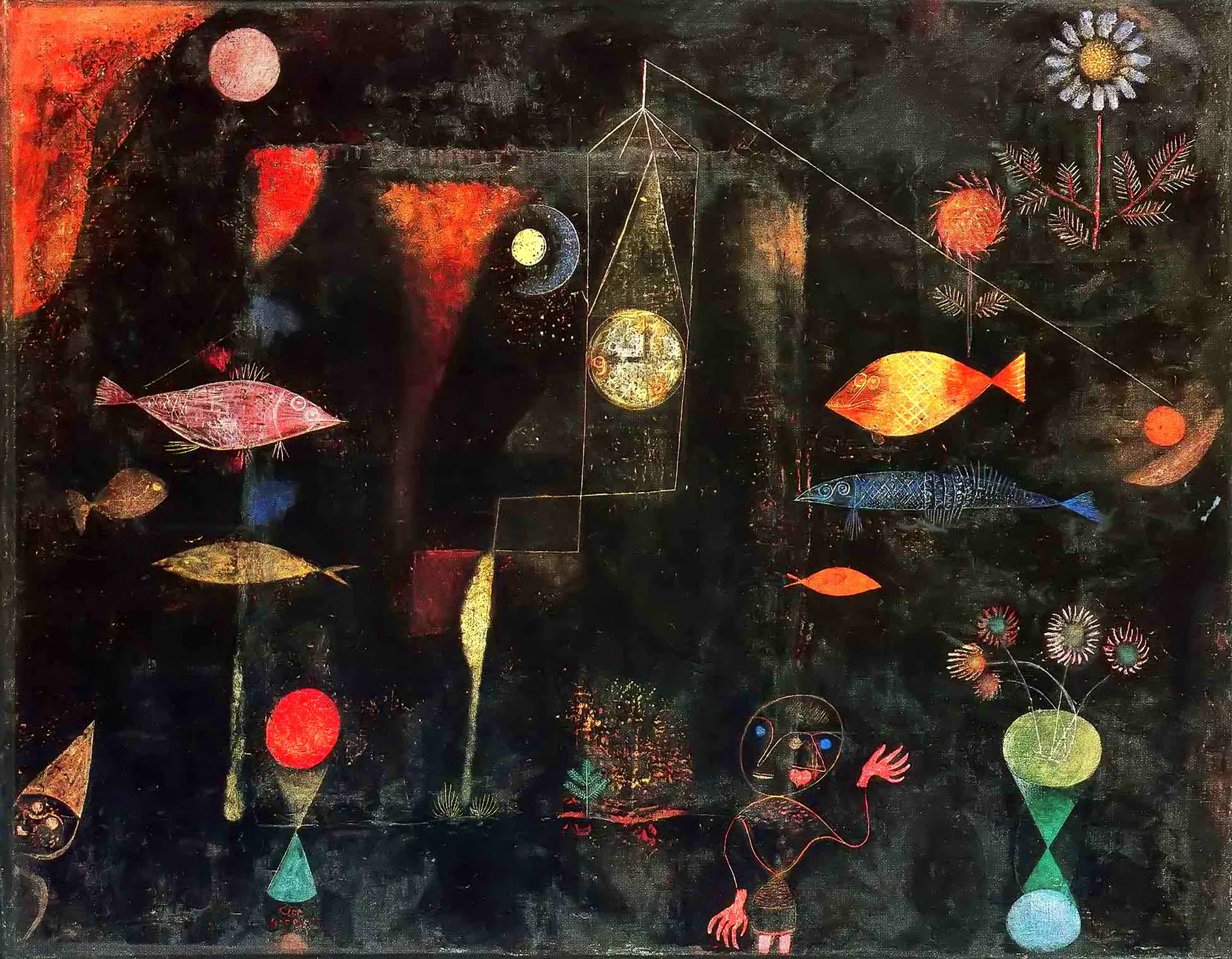
To engage with my music is to confront a deliberate paradox: the construction of formidable, kinetic architectures designed to hold the fleeting, the fragile, and the dissolving. That friction is what animates the music: its momentum, its asymmetry, its resistance to stasis.
I am not beholden to the systems I employ. Fractals, chaotic processes, or set-class logic may serve as compositional DNA, but they remain provisional. They can be fractured, obscured, or abandoned if the work demands it. Systemic integrity is subordinate to the perceptual and emotional reality of the music. Structure, in this sense, is scaffolding: a way of stabilizing attention long enough to observe the instability of memory and the sounding moment.
Although my formal training culminated in advanced study within American institutions, my entry into composition was autodidactic. I arrived in my early twenties not through curriculum, but through a philosophical ambush: an encounter with Arnold Schoenberg’s Theory of Harmony and Style and Idea. Because I had to reconstruct my understanding of music from first principles, I approached formal study less as a site of formation than as a laboratory of peers. Structural rigor, as I encountered it in Schoenberg, was not an inherited academic posture but a necessary tool for navigating a fragmented present.
This demand for precision manifests across divergent scales. I am drawn both to extended, world-building forms, such as the thirty-minute spans of my Op. 4 and Op. 11, and to hyper-compressed miniatures, such as my three-minute Bagatelles. Within these works, I draw on a colliding vocabulary of techniques—algorithmic frameworks, serial manipulations, polyrhythmic hocketing, extended harmony, and more—to create relentless, asymmetrical momentum. Yet these systems are never presented in their raw state. They are transformed, overwritten, and redirected by intuition: by ear, by gesture, by pacing, by color. The music’s density is athletic, demanding a staggering physical commitment from the performer, yet it must leave behind a deeply human surface that breathes and slips unpredictably against its hidden code.
It is through this malleable logic that I approach the subconscious. Much of contemporary technique has already been articulated; what remains more resistant is the unconscious and its manifestations in dreams and desires. What particularly fascinates me about the dream state is its shifting, situational exactitude. In a dream, events feel profoundly right because they unfold under an internal logic, but this ruleset is not a fixed formula; it morphs and adapts to the immediate psychological necessity of the moment. Drawing on the cinematic poetry of Andrei Tarkovsky, I treat music as a space where formal fragmentation serves as a key to oneiric doors.
Within this space, an aesthetic of lightness emerges. A parallel can be drawn to Salvatore Sciarrino’s Vanitas—for me, an exploration of emptiness, negative weight, memory, and the dialectics of silence. Crucially, however, this fragility is not confined to frail textures or constant quietude. My music often embraces exuberant, fiercely loud, volatile extremes, mobilizing sheer kinetic force to frame the void. The "crashing waves" and "birdsongs" of Op. 11, or the quiet, distant melodies suspended in my chamber works, are momentary flashes of vulnerability. The tension lies in this disproportion: the use of structural weight and dynamic volatility to capture a glimpse of wonder before it dissolves into silence.
This tension also shapes my treatment of music history. My works often contain fragments of the archive: a passage from Beethoven’s Hammerklavier (Op. 6), a ghost of Scriabin (Op. 4), a Monteverdi duet (Op. 5), or the melismatic grief of an Albanian kabá (Op. 11). But I do not invoke the past out of neoclassical nostalgia or postmodern irony. I treat these materials as distorted objects already undergoing decay. Drawing on Borges’s Pierre Menard, Author of the Quixote, I am drawn to the absurd task of reinventing the archive from within. I throw the master codes of the past into the centrifuge of my own musical time and see what barely survives the process. When a recognizable ghost cuts through the dense grid of the music, it functions as what Roland Barthes called the punctum: the listener does not merely hear a quotation; they experience the physical sensation of a door slamming in a distant hallway—then its reverberation. It is a moment of nostalgia and fatalism: the sound of the archive corroded by an imperfect present.
Ultimately, composition becomes a practice of self-redescription. I use the tools of the Dürer engraving—the compass, the scales, the mathematics—to pry open the architecture of a dream. This music is a disciplined observation of mortality, but it also embraces a playful irony: the meticulous calculation of a trace. I am searching for a sonic language that can honor both the weight of history and the impermanence of sound itself. Yet at a certain threshold, that language begins to fail. Architecture cannot fully account for what it is meant to hold. The trace resists containment. It appears instead as displacement: an image, a sensation, a fragment that obeys no durable syntax and yet insists with its own necessity. What follows is not an explanation, but a remainder.
Strict formal logic furtively dissolves, and the longing for my childhood years, spent in bliss, comes into focus: the sun and the Adriatic Sea, boats floating by the dock, fine burning-hot sand, a busy Pazar, a truck ride, a castle, song, and cheers—these are my earliest memories. It is hard to recognize myself amid this synthesis of contradictions: I want anonymity yet seek greatness; I crave rationality yet surrender to the fleeting trace of memory; I demand strict law yet revel in playful chance. I am a trace displaced within a web of musical signs—ultimately, still just the student who opened Schoenberg at twenty-one and stepped willingly into the labyrinth.